Product UX/UI Lead · AI Design Technologist · Two Decades
For two decades I've designed products. Now I build the AI tools and design systems that let a whole team ship them.
I operationalize AI as team infrastructure: a design system built into a tool, research and prototyping compressed with Claude Code, always with a human keeping the judgment. The result is less about any one screen and more about how fast, and how consistently, an entire org can ship. Ten-plus of those years I led design teams, mentoring in-house and outsourced designers. Six case studies, one practice.
How I work with AI
Operationalize AI as org infrastructure, a multiplier
I don't just use AI to make screens. I built Idea Builder with Claude Code so a design system becomes a tool the whole team builds with: one source of truth, so what ships meets the bar no matter who builds it. My role shifts from drawing every screen to running the system.
Human-in-the-loop, always
AI compresses the work; the designer keeps the judgment. AI drafts tone and personas and the team decides; AI synthesizes research and I verify every source; the tool assembles a screen and design confirms at QA.
From static components to context-aware patterns
A generative identity system turns any wallet address into its own illustrated avatar, about 39.5 million deterministic outcomes, no server or signup. I built it as a self-contained tool and handed it to the dev team to wire in, so avatars generate on account creation or sign-in: designers skip the manual assets, developers skip the wait.
I bridge design intent and technical feasibility
I ship working code, not just mocks: Claude Code prototypes stakeholders test in week 2, a real iOS proof-of-concept for autonomous capture on Spot, and specs that hand a developer exact, on-system values.
The wallet-image generator, running: paste any address, it detects the chain and renders that address's own avatar. No server, no signup. This is the self-contained tool I handed to the dev team.
Signals on velocity and consistency
- 5 to 6 concept directions explored on Trugi before converging, instead of stopping at the first workable one.
- Stakeholders tested working Claude Code prototypes in week 2, not after a long spec cycle.
- Prototypes matched to the decision: Figma and Figma Make for fast flows, ProtoPie for complex interactions, Claude Code when it has to be real, working code, so the team reacts to real behavior, not slides.
- Research synthesis compressed from days to hours (qualitative, remote, every source verified).
- A new product page ships on the existing design system without a redesign from scratch.
- Spec-to-ticket removes hand re-typing at handoff: developers build from source-of-truth values while design confirms at QA.
Where it all comes together
The through-line is the user, not the deliverable. When usability sessions told us the old wallet read as cold and untrustworthy, we rebranded PenguinWallet, and shaped Trugi's beginner-first language, to feel friendly and casual, so trust holds at the moment of transaction. We restructured SpaceRouter's landing and product IA, and Beamo's navigation, so each visitor routes straight to their own need instead of hunting for it. And when users were within reach, as with Omnibus's factory operators and Ekam's yoga community, we went to them to watch how trust forms and where the real pain points hide. That is the practice: solving problems with the team every day, with the user and their environment as the deciding factor, in commerce, industrial, or crypto alike. And that is where efficiency matters: tools like the wallet avatar generator and Idea Builder reduce confusion and lower the communication cost, keeping the team collaborating and supporting each other, so our effort goes to the tasks that matter most.
The work
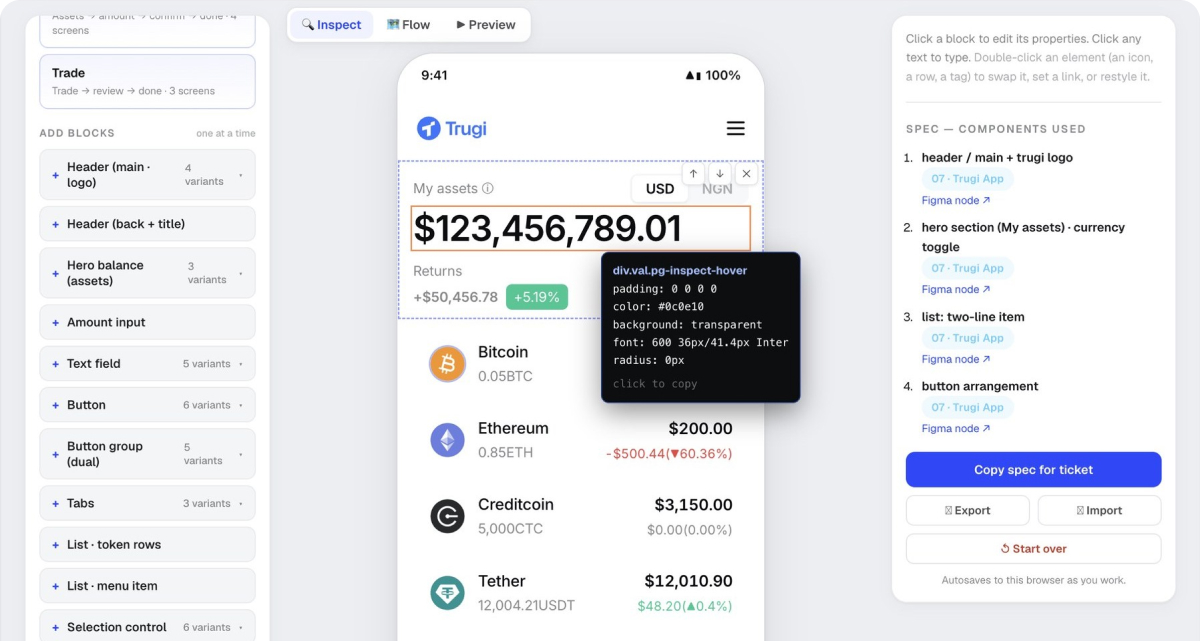
Idea Builder In team use, improving
Built to cut the communication cost of shipping as a team: instead of relaying an idea from PM to design to engineering, everyone builds from one shared source. An internal tool made with Claude Code, in real cross-functional use, that turns a design system into governed components, pre-wired flows, and exact spec-to-ticket handoff.
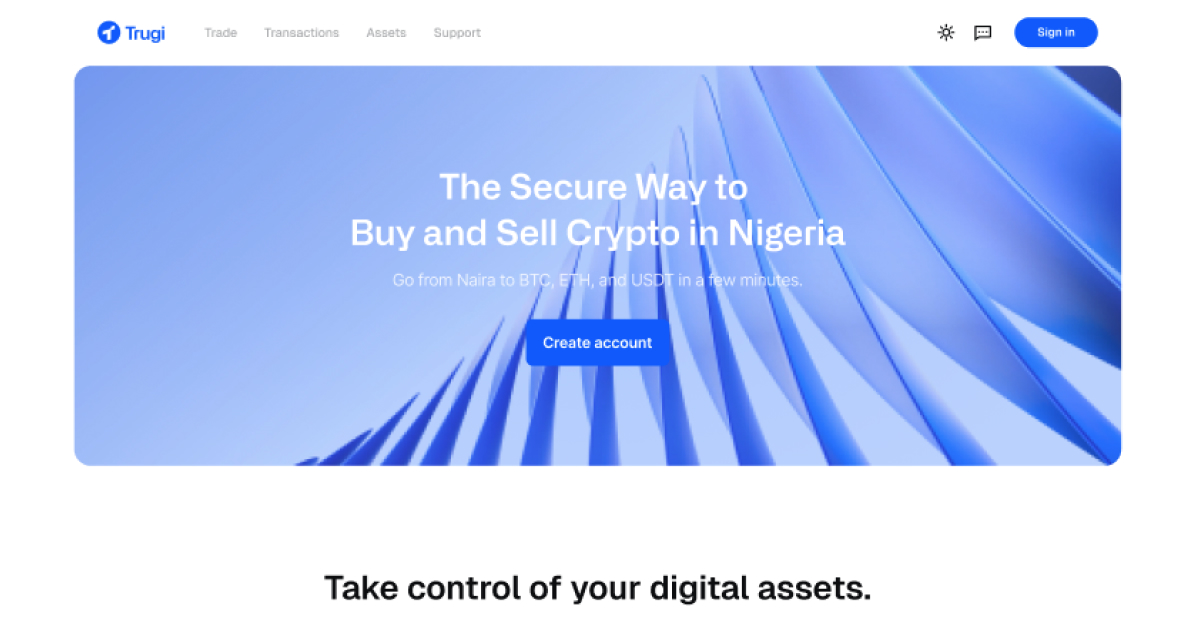
Trugi Launched in Nigeria
5 of 6 first-time testers finished a swap unaided, and stakeholders tested working Claude Code prototypes in week 2. An AI-native DEX with AI-assisted remote research and a generative wallet-identity system.
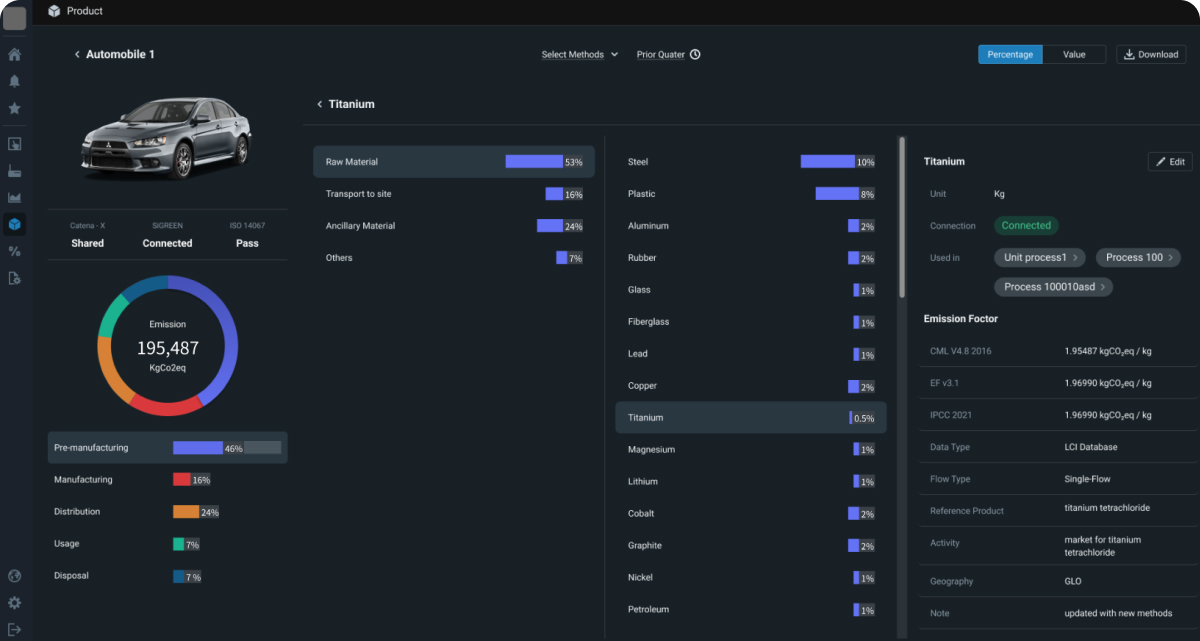
Omnibus Shipped
Designed autonomous, human-in-the-loop analytics on a shipped IA foundation: a dashboard that flags an anomaly, explains it with evidence, and leaves the call to a person, the same pattern an e-commerce team needs to catch a conversion regression. Shipped the IA and sharper client demos; autonomous layer proposed.
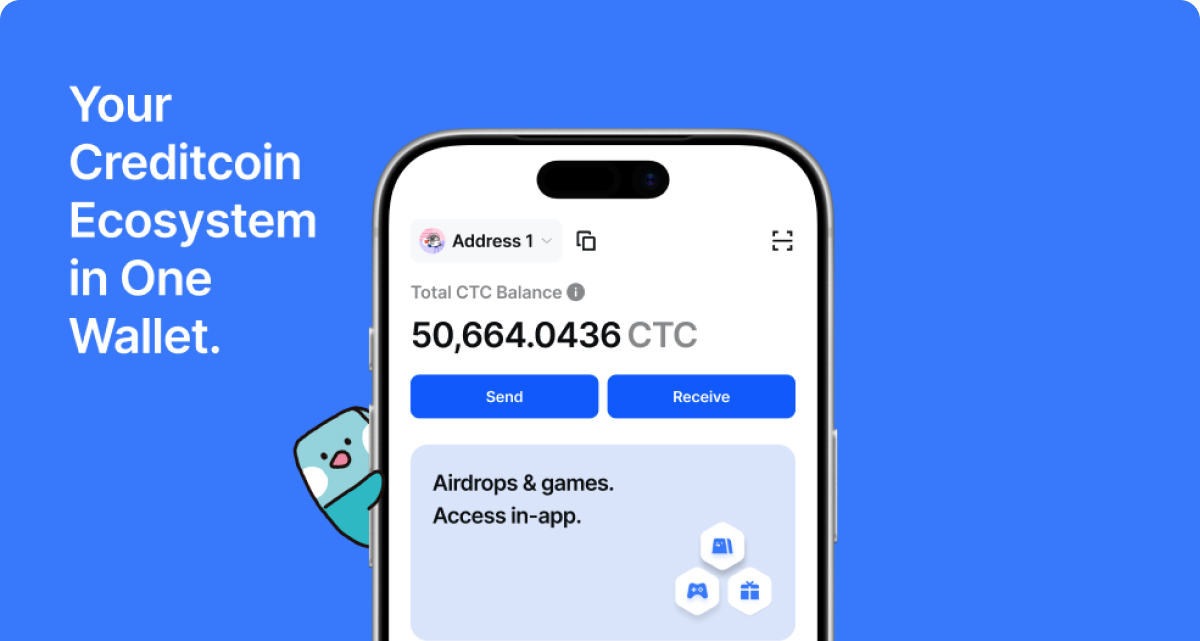
PenguinWallet In development
A rebrand that answers the exact trust complaints usability sessions surfaced ("not trusted, old, no different from any other wallet"). To maximize its marketing reach, the brand got friendlier with the character up front, larger visuals, and a clearer UI that builds trust on the highest-stakes screens, connect and confirm. The rebrand is complete and development is underway, coming soon.
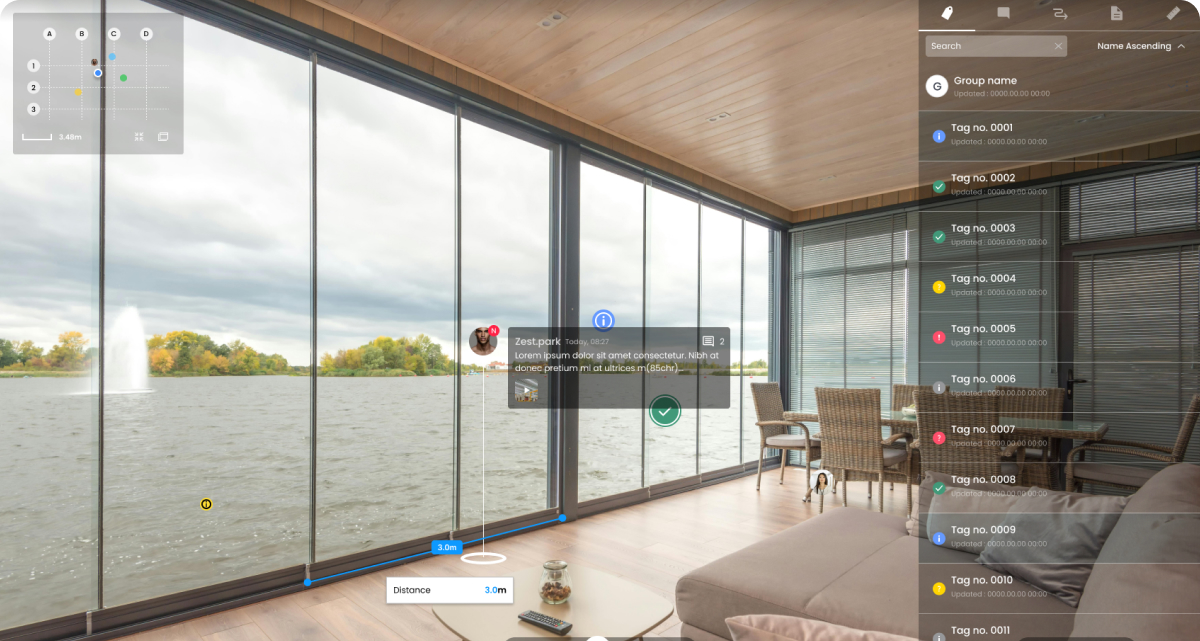
Beamo Shipped + PoC
A digital-twin product that replaces repeated site visits with safe, remote 3D monitoring and communication with the field. Also led the UX/UI for a physical-AI autonomous-capture PoC on Boston Dynamics' Spot, for major manufacturing plants in Korea and abroad.
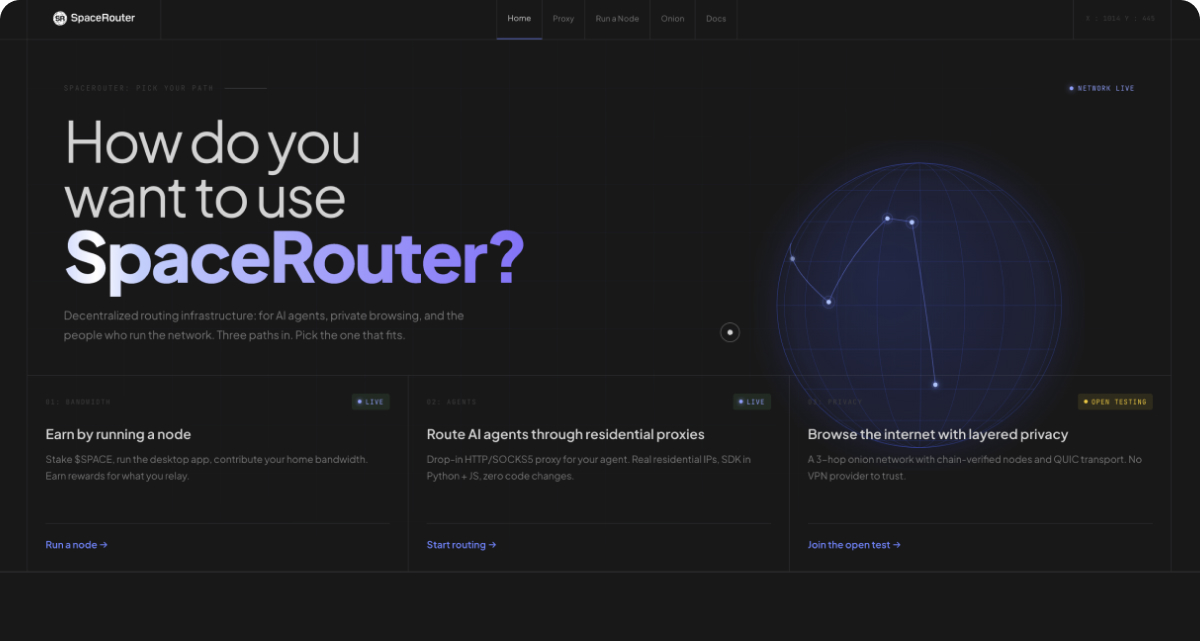
SpaceRouter Partly live
Making a decentralized network trustworthy enough to use: a self-select entry replacing one catch-all pitch, and trust shown hop by hop.
Selected earlier work
Earlier UX/UI work, from before the AI-tooling practice above, included for domain range: commerce, booking, and consumer products across iOS and Android. Different toolset (Sketch, Adobe XD, ProtoPie, Zeplin), same instinct for structure and flow.
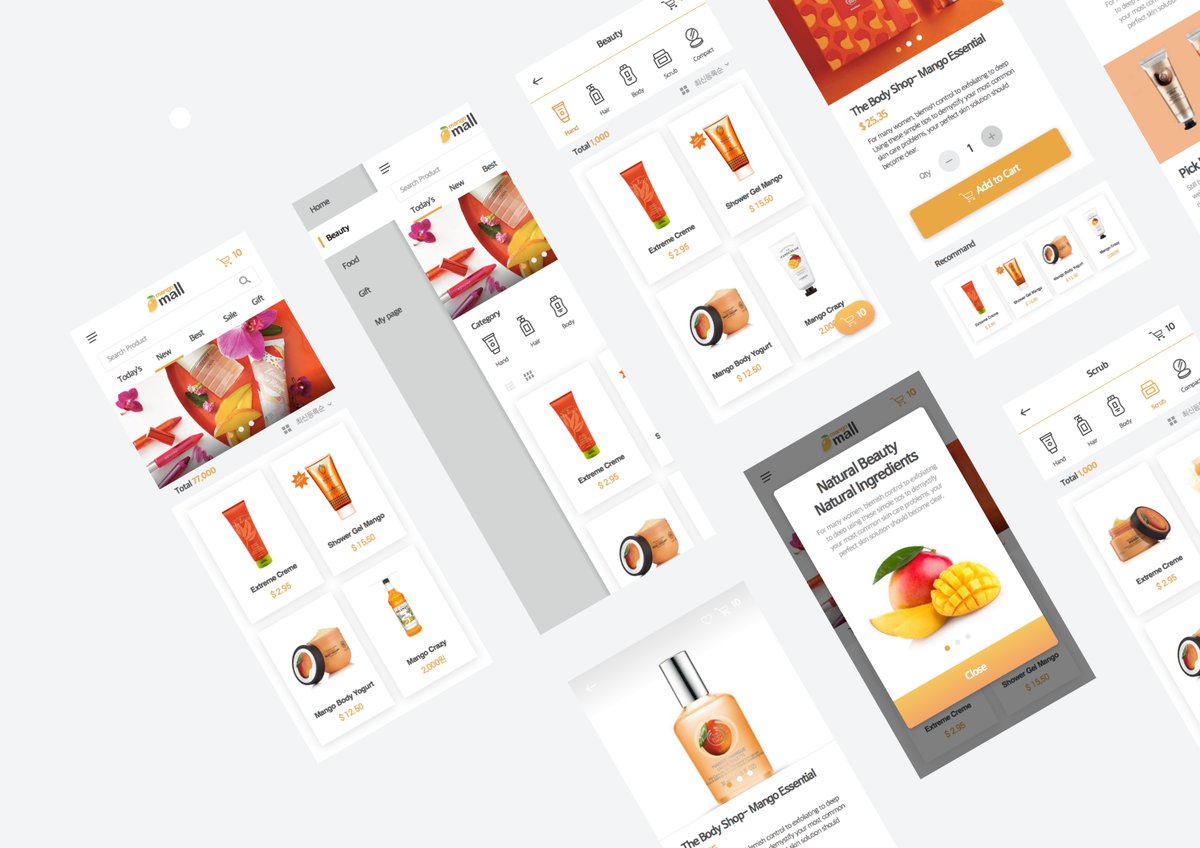
Mango mall
A subscription-commerce iOS application. The full flow, from browse, category, and product detail to cart and checkout, designed in Sketch and prototyped in ProtoPie.
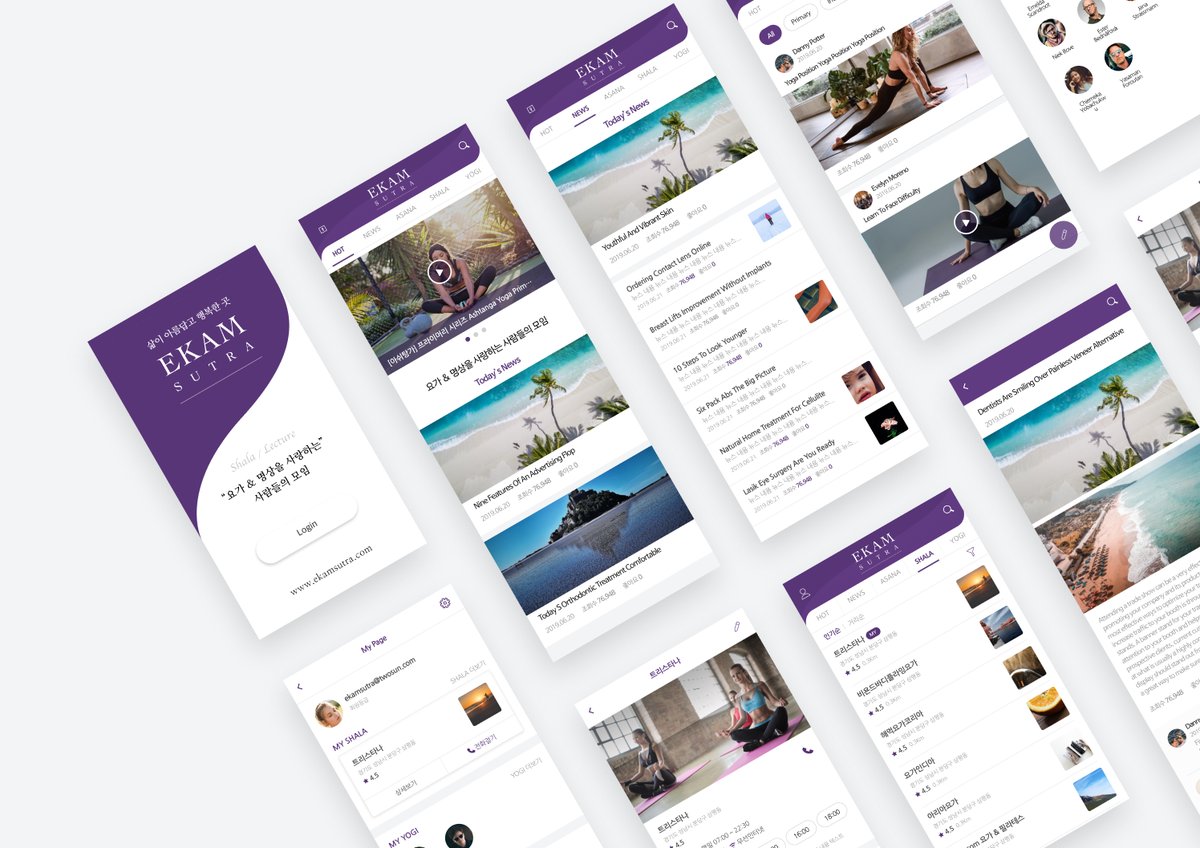
Ekam: yoga community
A yoga community app in Pangyo: instructors post class clips and info, members watch, then decide whether to book. I led branding and product, one system spanning the app and physical membership cards.
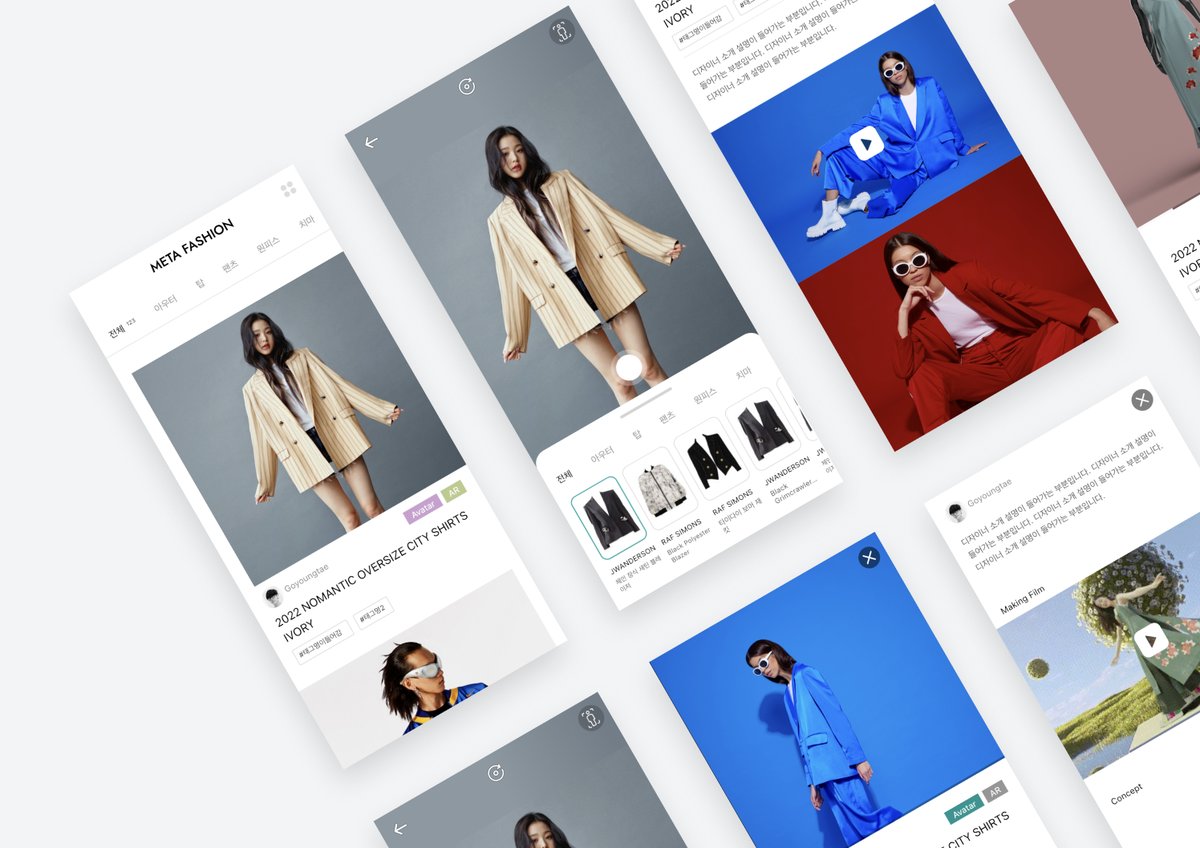
K° MetaFashion
Virtual try-on, model-led lookbooks, and product browsing for fashion retail on Android. I led the project end to end, so shoppers could preview a full look before committing to a buy.
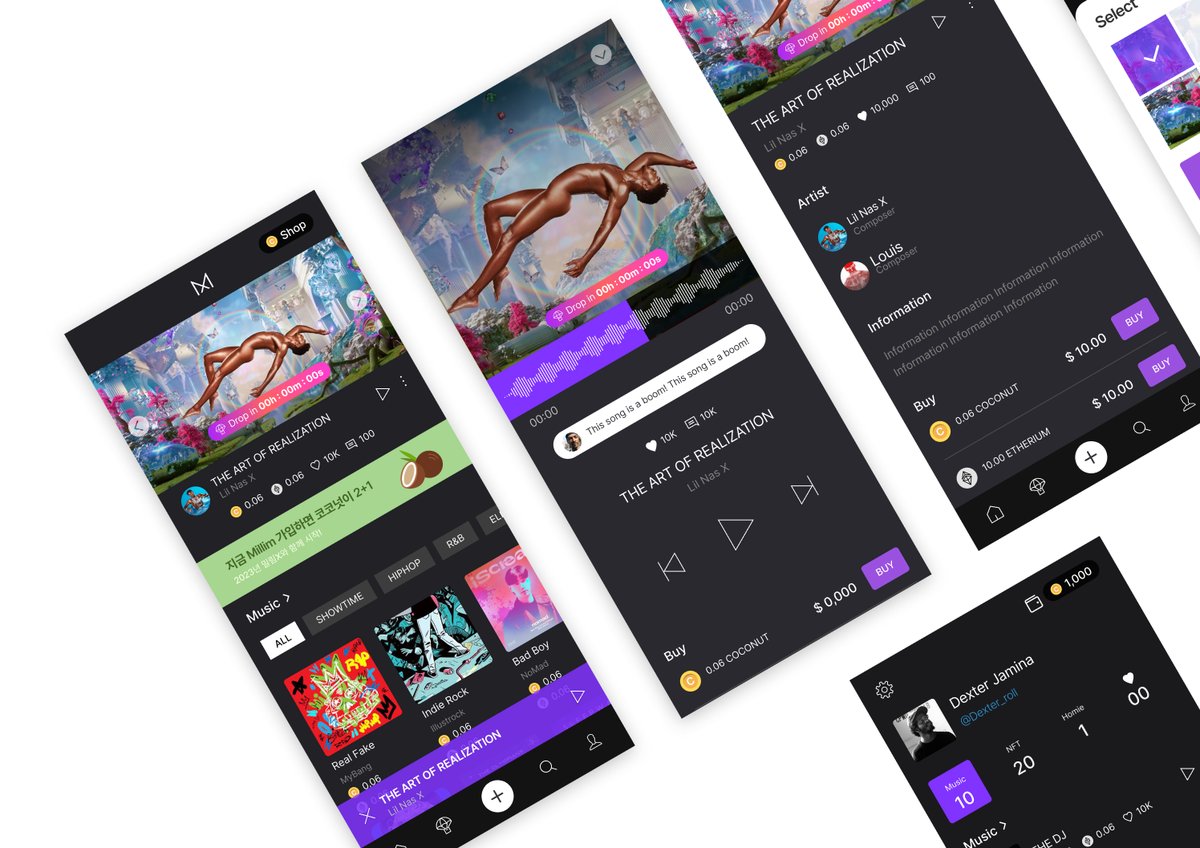
Millim X
A consumer music product with a crypto layer on iOS: streaming, artist and track detail, and timed NFT drops with countdowns and in-app purchase at the moment of a drop.